

When I first stepped into the Crossroads of Oblivion, the pale mushrooms glowed above my head, and the rusty armor whispered in the shadows, I realized that _Hollow Knight_ was not another ordinary Metroidvania games. This is a Gothic mourning held in the Zerg ruins, and the elegy of civilization is buried under each broken arch.
The game opens in an underground kingdom engulfed by the plague. The unknown knight I played was like a piece of fallen leaves floating into the holy nest, and the bone nail in his hand was not so much a weapon as an archaeological tool. When I was infected with a beetle for the first time, it crashed madly against the wall and made me freeze in place — it was not a monster, but a patient struggling in pain.
The most shocking brother deliberately happened in the City of Tears. The never-ending acid rain knocked on the bronze dome, and the ghosts of the aristocratic Zerg played the out-of-tune guqin on the balcony. When I defeated the soul master and watched his corpse turn into countless luminous moths, I suddenly understood the true meaning of this aesthetics: Gothic is not fear, but the ultimate romanticization of death.
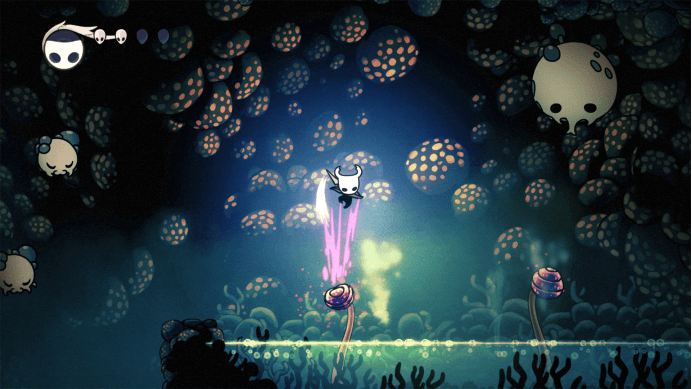
The game’s interpretation of “the beauty of dilapidation” reaches its peak in the fungal wasteland. Luminous mushrooms grow from the knight’s corpse, and the spores form short verses in the air. Even the most deadly traps are like abstract art installations. Once I jumped into a giant mushroom to avoid the acid, but found that the whole Zerg’s nursery was hidden in its softness — death and newborns reached a strange harmony here.
With the deepening of the exploration, the truth of the decline of the kingdom gradually emerged. Every BOSS is not a simple enemy: the mantis lord is guarding the dignity of the tribe, the watchman knight is fulfilling the thousand-year oath, and even the final radiation is just an ancient god who does not want to be forgotten. What moved me most was that in the ending of the God Seeker, when the little knight chose to merge with the radiation and seal the plague by himself, the sacrifice was closer to the origin of the Gothic spirit than any victory.
Late at night after customs clearance, I turned out Poe’s poetry collection. When I read “Demons Called ‘Despair’ by Angels”, I suddenly remembered the shadows I saw at the bottom of the abyss — they were not monsters, but containers of the failure of knights of all generations. The greatest thing about this game is that it makes me understand that the purest light is often hidden in the deepest darkness.
If you also love those incomplete beauty and are eager to find eternity in the ruins, _Hollow Knight_ will be your most poetic cemetery roaming. After all, only those who know how to appreciate dilapidated can understand what true completeness is.